Quit Frontin on Kwanzaa
“Pro-Black like Craig Hodges but my dashiki’s in the cleaners.” – Common
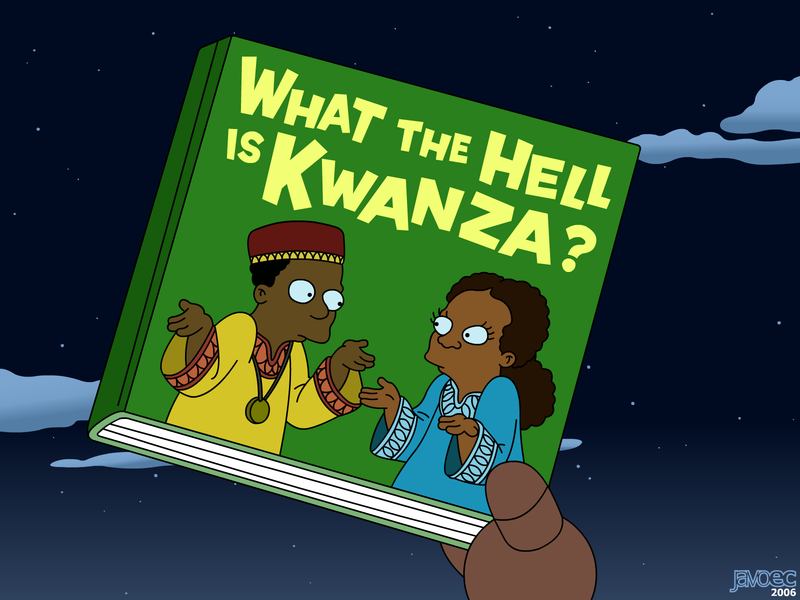
Being Pan-African is a weird thing. To many folks it means wearing dashikis, avoiding swine, and shouting ase at every opportunity. I, however, realize that you aren’t going to do that. For most Black folks, the holiday of Kwanzaa is one tied to Pan-Africanism and thus gets mentioned more in their living rooms on TV commercials than at family gatherings. I’ve decided we’ve been frontin’ on Kwanzaa for no real good reason. So here are some pre-emptive responses to questions and concerns.
Yo, did you know Kwanzaa isn’t even real?
Okay, unicorns, not real.
Leprechauns, not real.
Kwanzaa = real. Kwanzaa, like all holidays was created and is celebrated for a reason. Dr. Maulana Karenga created it in 1966 and it’s not a secret. In fact, it is supposed to reaffirm the ability of African peoples to create meaningful cultural celebrations.
I can’t remember the words?
Dude, this is not a recitation competition, if you can’t remember the Kiswahili words you have a friend called the internet or books. Look them up! No one is challenging your Blackness, just trying to honor the spirit of the celebration.
But why should I even remember the words?
Doing extra work to think about the words in Kiswahili tends to make me actively think about the principle. We use words everyday and seldom think about their meaning. Using the Kiswahili words and the English words creates an opportunity to start to actively think about what they mean. For example: Umoja- Unity … what does unity mean? What is community? Who is in? who is out? How do we bond it or break it? See, that was easy right.
But I’m Christian, so I celebrate Christmas.
Glad to hear it, what’s that got to do with celebrating Kwanzaa. Kwanzaa isn’t “the Black Christmas”, nor is it anti-Jesus. In fact, you know all that commercialism that you complain about surrounding baby Jesus’ birth, yeah Kwanzaa is trying to fight it. Look you have an ally! Oh and fyi, you do realize Jesus wasn’t really born in December, right?
But I don’t have a dashiki, I only have a kente cloth bow tie that I got in the 90s.
Please don’t dust off that Kente cloth bow tie or that dashiki. The point is not about what you wear, but what you reflect on. People have asked me, “You’re all Pro-Black and Afrikan, why don’t you wear African clothes?” To which I respond, “Anything I put on is African clothing.” See there, I’ve given you permission, tell them Dumi said you don’t need to get your Baduizm on to participate.
Kwanzaa is a holiday that is designed to get Black folks, African-Americans, Colored, Negro, New Afrikans, etc (pick your favorite or least favorite monikers) to reflect on who we are as a community, a family and a global nation. Kwanzaa is about taking explicit steps to live by principles, not just for 7 days, but for 365 of them. For those who look at Kwanzaa as a fad or trite, that is because they’ve forgotten this important part. If you just reflect on these principles once a year, you will never see the fruit of your labor.
So the greeting for the celebration is “habari gani” which means, “what’s the news?”. Man, that’s so 60s/70s I love it! But you respond with the name of the principle to keep it on your lips and in your mind.
The seven principles, known as the Nguzo Saba, are:
Day 1: Umoja- Unity
Day 2: Kujichagulia – Self-Determination
Day 3: Ujima – Collective work and Responsibility
Day 4: Ujamaa- Cooperative Economics
Day 5: Nia- Purpose
Day 6- Kuumba- Creativity
Day 7: Imani- Faith
I think now, more than ever, we run the risk of being allured by an Obama presidency into thinking we have arrived at the promised land. Look around your family, your neighborhood, your nation, and tell me if we can afford to continue to not be self-reflective and work towards a better community? If you cannot take seven days to redefine you relationship to the people who live with you, love you, and look like you, what kind of change are you really invested in?
p.s. I hope you noticed Kwanzaa was spelled with one “a” in the picture. I’m pretty sure it’s from Futurama.
p.p.s I do recognize Dr. Karenga’s heinous actions towards sisters Deborah Jones and Gail Davis, which I do not ignore nor endorse! However, I do think holiday is important form of healing and re-centering in our community. This is an endorsement of the larger African spirit than an individuals actions.
Filed under: Ancestors, Celebration, Food for Thought, Race
 Share with friends


Pingback: Uptown Notes - Quit Frontin on Kwanzaa()
Pingback: uberVU - social comments()
Pingback: Uptown Notes - Fighting for Unity?()
Pingback: Django and Self-Determination - Uptown Notes()
Pingback: Creating Community | My Black Networks® -The Latest News from The African Diaspora()
Pingback: Fighting for Unity? | My Black Networks® -The Latest News from The African Diaspora()