Can you breathe? Reflections on Non-Indictments, Activism and Black Life
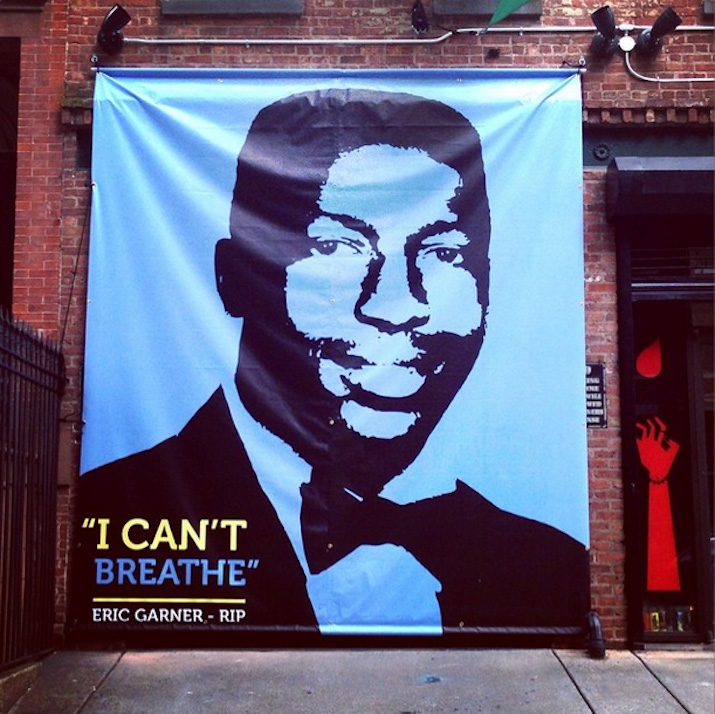
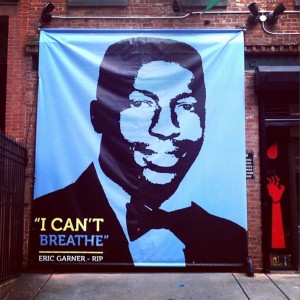 There isn’t enough ink to express our pain. Day after day, month after month, year after year, the pain of being Black in America globally is apparent. Moments ago I read the headlines and tweets that told me the NYPD officer Dan Pantaleo (say his name until it can’t be forgotten, until he’s held responsible) the NYC cop that killed Eric Garner would not be indicted. A week and two days before that I heard news out of Ferguson, Missouri that Darren Wilson would not be indicted. That same day hours before, I watched my beautiful daughter be born into this world. Being Black is like that, valley, peak, valley—in that order.
No matter who it is, the time comes that you realize that being Black is hard and beautiful. You come to learn that your cool, your clothes, your rhythm is quested after like a golden fleece, and then you remember that you’re hated all the same for it. Hated for the thing you inherently possess and ultimately cannot dispossess—trust me, many are trying to give it up, but you can’t. Many are trying to recreate/generate it, but it has to be organic—we synthesize, it can’t be synthesized.
I recently got in an online disagreement with a family member. I gave up arguing online about 2 years ago and my life has been all the better for it, but this time suffering from sleep deprivation courtesy of our bundle of joy, I engaged. My cousin, one of closest loved ones on the planet, posted a status about shopping on Black Friday and tongue-in-cheek told folks to “say something” about her shopping. I was frustrated at her at life.
I remember when I first heard the calls to boycott Black Friday #notonedime, I knew that arm chair theoreticians and activists would sharpen their darts aiming at the hot air balloon of social activism. I knew it’d be a dog pile of, “How is that supposed to help?”, “We need new solutions!”, “What difference will it make?” –you know the standard chorus of consternation. I’d decided that for each post that someone put up like that I’d ignore it and write them off as disaffected, short-sighted haters (which they often are). But truthfully I understand them. I’ve been them. It’s kind of like being at a dance and not really knowing how to dance so rather than stepping out and risk being a fool, you talk about the DJ, you chit chat with your boys, you explain how you don’t like the newest fads … all the while the dance goes on, everyone else is sweating it out and having a good time, and you go home realizing you missed out, but never admitting it. It’s easy to be on the sidelines, it’s hard to put your shoes on the dance floor.
Moral and ethical courage are sometimes in short supply, but we have enough to move ahead, we never needed 100 percent to be on board, just a few committed ones. A few years ago an elder told me, “If everyone who claimed to have marched across that bridge [Edmund Pettus Bridge] was on that bridge the damn bridge would have fallen in!” They’ll come around later … or come around for the victory party. When Fidel Castro was asked about what he’d do differently regarding the Cuban Revolution he said he started with 82 men but he would have started with fewer men but ones who had absolute faith. That’s real rap!
Boycotting Black Friday or Cyber Monday may not be your cup of tea, but neither is the loss of Black life. I am in awe of the young people organizing out of Ferguson and the people who have poured into that community for the past 118 days. The boycotts on Friday or Monday were mass actions that allowed folks without much skin in the game to make a sacrifice, to symbolically and strategically show impact. It worked, no matter what mainstream media says. I’m still not really cool with my cousin for not participating, but she’s not alone. It just means we need to do more work to show folks why we matter, why boycotts matter, why protests matter, why Black lives matter.
CONTINUE READING
 Share with friends